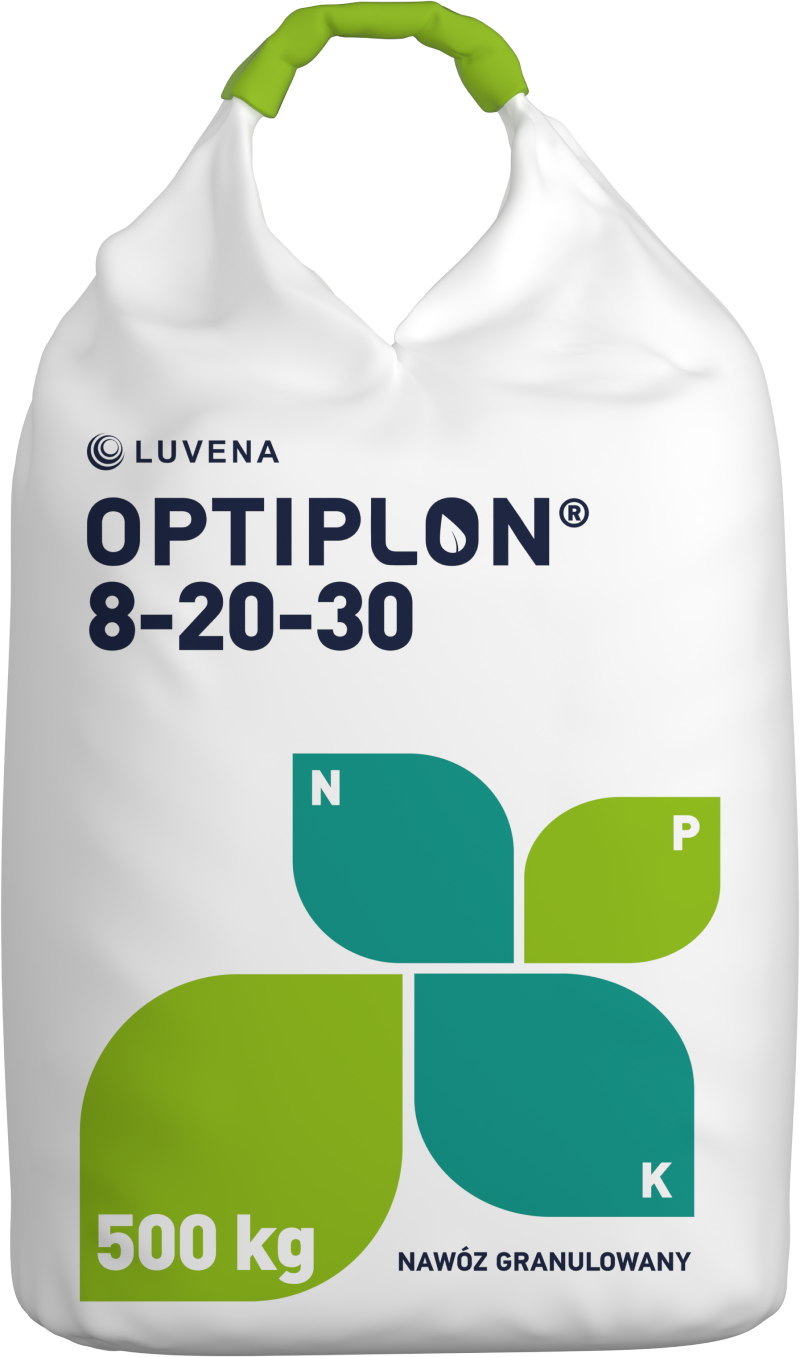
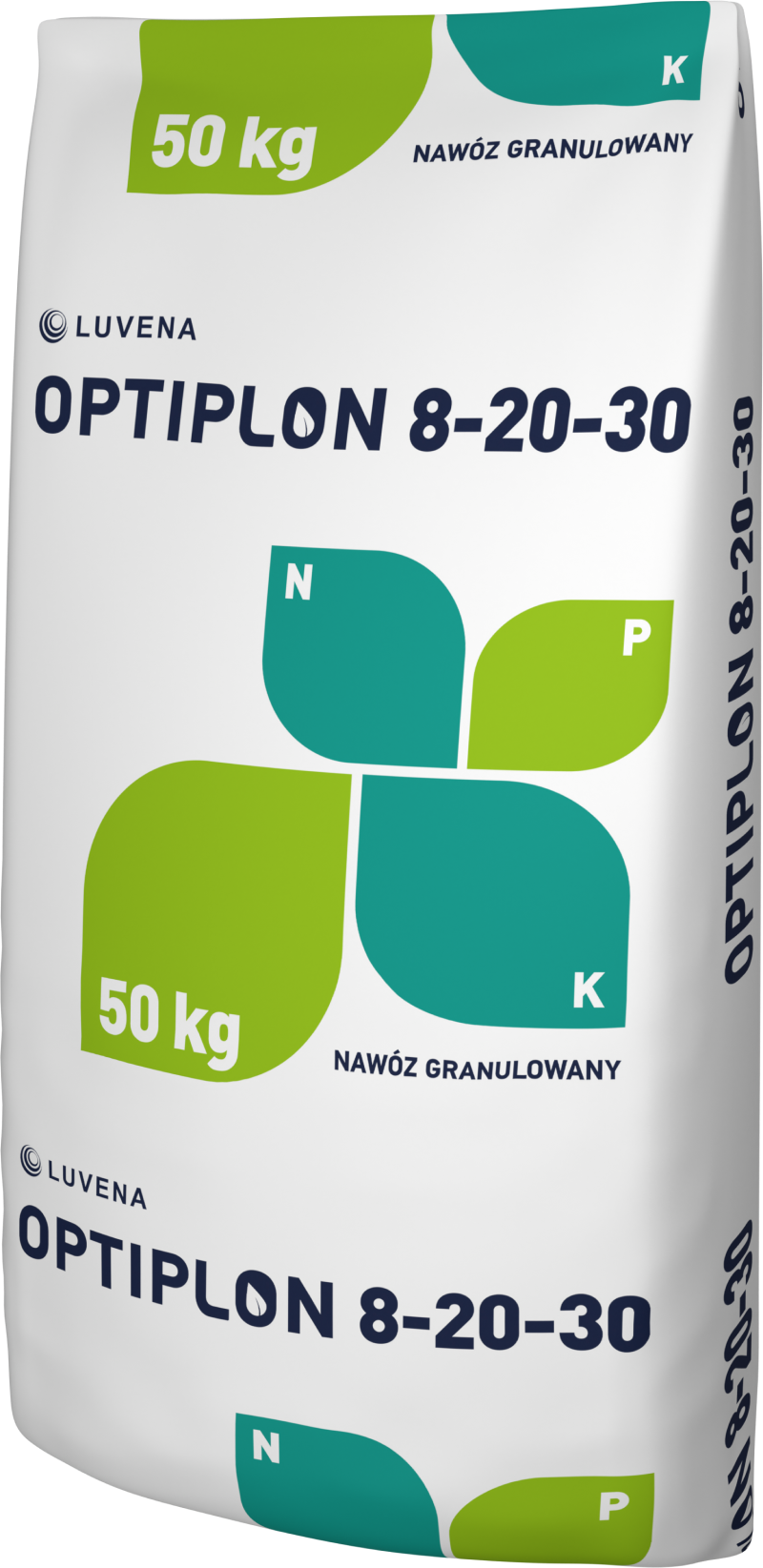
OPTIPLON® 8-20-30
EC FERTILISER ● GRANULATED ● COMPLEX MINERAL MACRONUTRIENT FERTILISER
NPK 8-20-30
- granulated fertiliser intended for all types of agricultural plants
- recommended for ongoing plant nutrition and for richness adjustment
- provides a valuable source of nitrogen, phosphorus, and potassium, with excellent solubility and assimilability
- the ammoniacal nitrogen contained in the fertiliser granule binds well in the soil and supports the uptake of phosphorus, both from the fertiliser granules and from the soil
- the optimum amount of nitrogen in the fertiliser ensures proper nutrient supply for winter plants during autumn
- contains valuable secondary nutrients (Ca, S), which aid in the assimilation and use of NPK, and ensure more efficient plant growth and development
- also recommended for Strip-Till localised sowing, or for corn sowing with grain pans
50, 500, BULK
Prills
Fraction size 2.0 to 6.3 mm – 95%
Bulk density: 0.85 to 1.0 kg/dcm³
| 8% | total nitrogen (N) |
| 8% | ammoniacal nitrogen (N) |
| 20% | total phosphorus pentoxide (P₂O₅) |
| 16% | phosphorus pentoxide (P₂O₅) soluble in water |
| 18% | phosphorus pentoxide (P₂O₅) soluble in a neutral solution of ammonium citrate |
| 30% | potassium oxide (K₂O) soluble in water |
| approx. 3% | total calcium oxide (CaO) |
| approx. 2,5% | total sulphur trioxide (SO₃) |
Universal granulated fertiliser for all types of agricultural plants. Recommended for ongoing plant nutrition and for richness adjustment. The fertiliser should be applied no later than several days before sowing the plants, and for best effects it is recommended to mix it with the soil following application. When using large fertiliser doses in sugar beet cultivation, a minimum period of 14 days should be observed between fertiliser application and the sowing of the plants. Excellent at fertilising permanent grasslands, can be used both in autumn and in spring (before growth begins and/or after 1st cut harvest, or after grazing). Fertiliser dosing should be adjusted to suit plant nutrition needs to achieve specific yields, always considering soil richness in phosphorus and potassium.
| PLANT | YIELD
t/ha |
CONTENT OF AVAILABLE PHOSPHORUS AND POTASSIUM IN THE SOIL | |||
| low | medium | high | |||
| winter cereals | 7,5 | 620 | 420 | 250 | |
| spring cereals | 6,5 | 550 | 400 | 250 | |
| winter rapeseed | 4,5 | 750 | 550 | 300 | |
| sugar beet (with manure) | 65,0 | 700 | 500 | 250 | |
| potato (with manure) | 35,0 | 550 | 400 | 230 | |
| corn for grain | 10,0 | 750 | 550 | 300 | |
| legumes for grain | 4,0 | 550 | 400 | 250 | |
| field grasses – green fodder | 50 | 720 | 580 | 280 | |
updateLast updated: 24 September 2024